Problem Statements

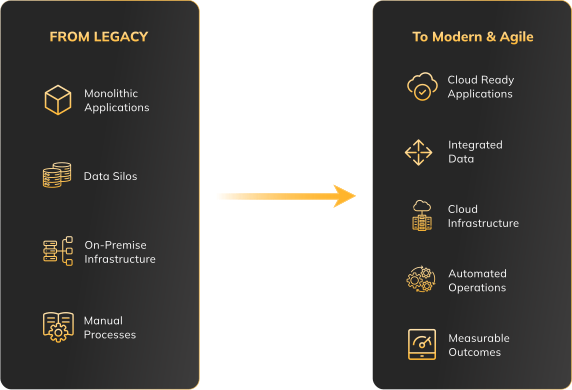
High Maintenance Costs and Operational Overhead
Legacy applications are expensive to maintain, requiring ongoing support, upgrades, and specialized resources that increase IT costs.

Monolithic Architectures Slow Innovation and Time-to-Market
Monolithic applications slow software releases, making it harder to launch new features and respond to changing business needs.

Unsupported Technologies Increase Risk
Outdated platforms, frameworks, and databases create security risks, compliance challenges, and vendor support issues.

Complex Integrations Limit Business Agility
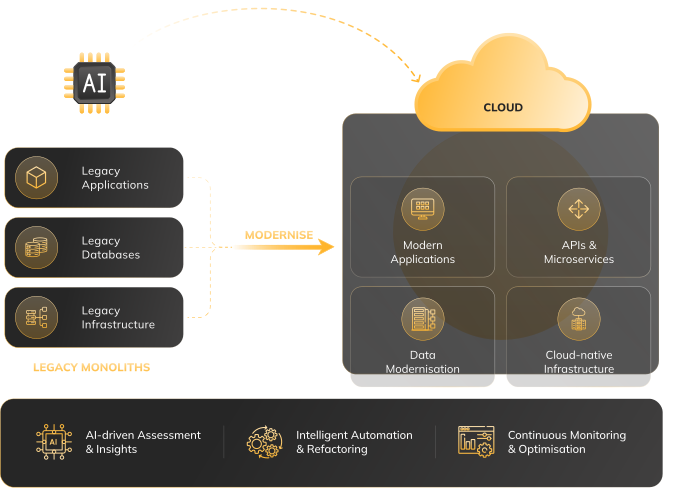
Legacy systems often rely on point-to-point integrations that make modernization, automation, and system connectivity difficult.

Limited Scalability Impacts Performance and Growth
Legacy applications struggle to scale with growing users, workloads, and data volumes, affecting performance and reliability.

Technical Debt Slows Down Development
Technical debt, outdated code, and legacy architectures increase development effort and slow digital transformation initiatives.